
vs. Marbella
Fuengirola operates at a fundamental price and profile discount. The buyer thesis is entirely different — income over prestige. The two markets do not cross-shop.

Indicative figures from our advisors.
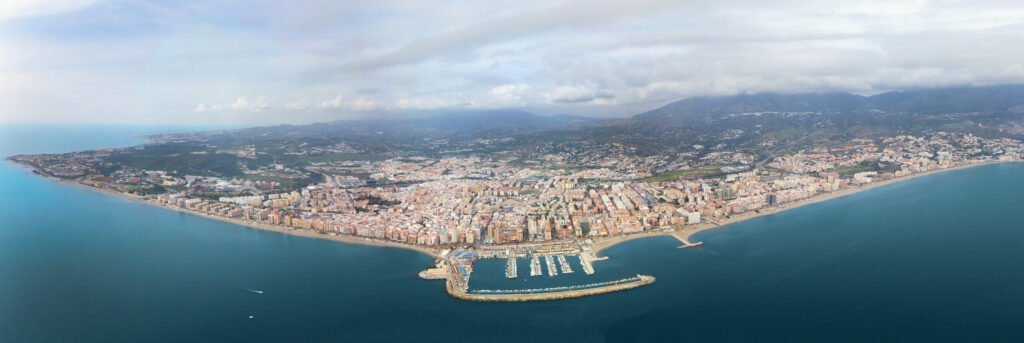
From its origins as a small fishing village, Fuengirola has grown into one of the larger towns on the Costa del Sol and one of its main tourist destinations. Largely urban in character, the town has roughly 76,000 residents — around 25% of whom are European foreigners — and feels like a constant hive of activity, with busy streets lined with tapas bars, shops, restaurants and clubs. For what homes here are asking, see Costa del Sol property prices by area.
Fuengirola is a vibrant town with an 8 km stretch of beaches, a quaint port and a recently redesigned main square, Plaza de la Constitución, that bustles year-round with locals and tourists alike. The square is the meeting point for the city's festivities — the annual summer Feria, Christmas and New Year — when streets are dressed in lights and the whole town spills out into song and dance.
Another major landmark and unique feature of the Costa del Sol is Sohail Castle, a striking medieval Moorish fort now used as a venue for concerts, markets and other events, particularly through the summer months. Málaga Airport is just 40 minutes away, and charming coastal towns such as La Cala and Benalmádena are within easy reach.
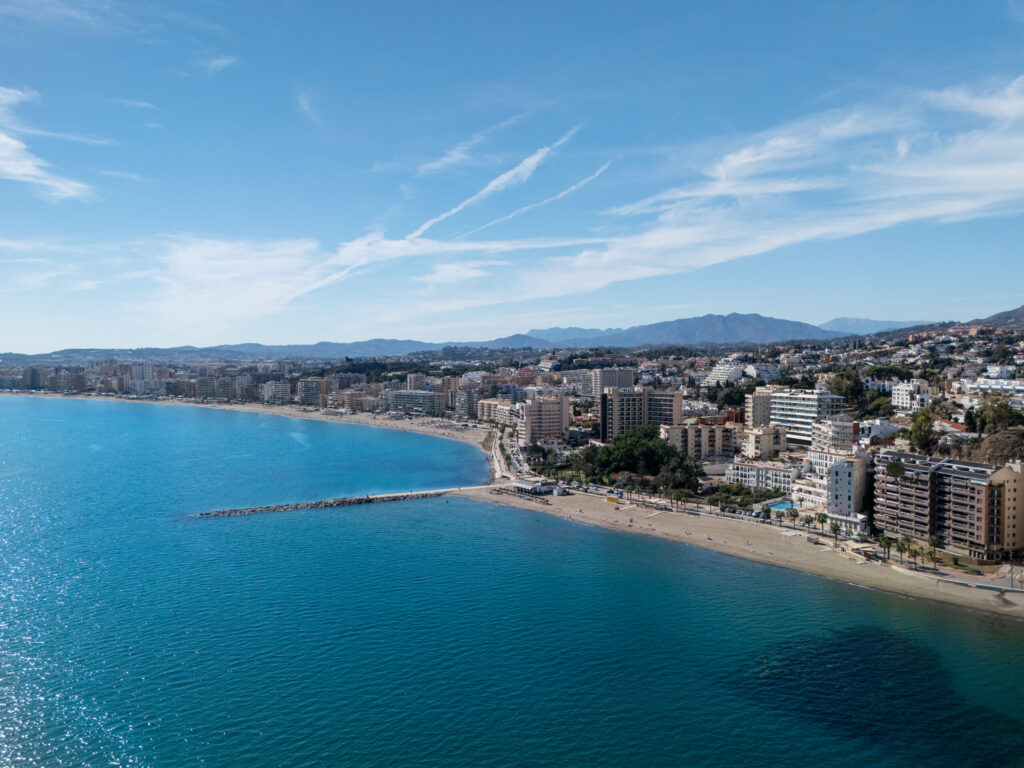
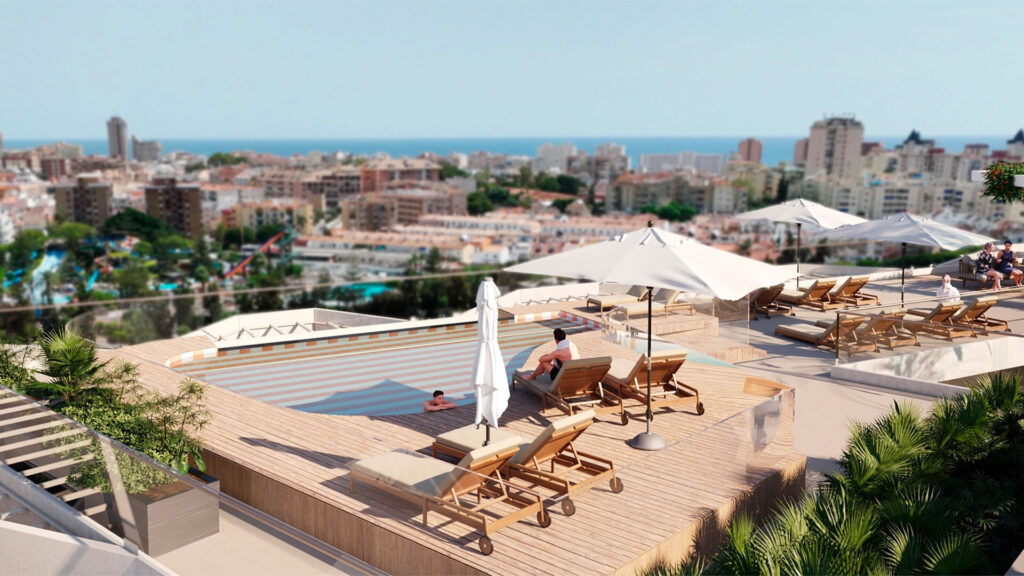
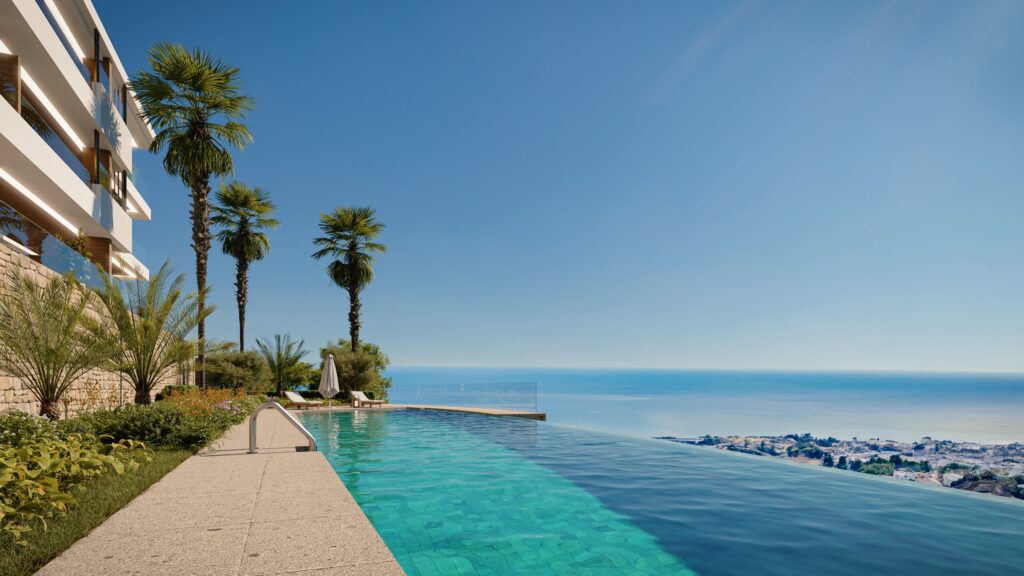
Plaza de la Constitución is lined with countless tapas bars, restaurants and quirky shops, and Fuengirola's nightlife is famous for its energy and inclusiveness. The Salón Variétés Theatre on the side-street Las Rampas offers year-round entertainment, while the Miramar shopping and cinema complex by the motorway hosts high-street brands and English-language films. Family attractions include Bioparc Fuengirola — an animal-friendly zoo set right in the centre — and the largest water park on the Costa del Sol.
Sohail Castle and the Fuengirola History Museum reveal the layered cultural past of the area, while the annual Fuengirola Feria and Easter week embody the energy of Spanish coastal culture — rides, flamenco concerts, religious processions and food markets fill the town for days. Outdoor options include golf, the Mijas Hippodrome racecourse, a go-karting circuit and parasailing or fishing trips from the port.
Fuengirola is only 25 km from Málaga Airport, with flights to all major Spanish, European and international cities daily. The town offers underground parking and easy access from the N-340 coastal road.
The bus and Renfe train links from central Fuengirola mean a car is far from essential — the train runs frequently to Málaga, the airport and the high-speed lines, and buses serve the rest of the coast reliably.
European visitors should obtain a European Health Insurance Card for medical care during their stay. Once settled and registered as a Spanish resident, free public healthcare is available through the Social Security network.
Affordable private health insurance is widely available through Mapfre, Caser and Sanitas. Fuengirola's medical facilities include Centro Médico Xanit and Centro Salus Clinic — both public and private services enjoy a strong reputation and many staff speak English and other foreign languages.
Fuengirola has a wide choice of public nurseries, primary and secondary schools — admission is based on residency and applications are made at the Town Hall. State schools typically offer free transport, extracurricular activities and additional Spanish tuition for expat children.
A number of private and international schools complement the public system, with further international options in nearby Mijas and Marbella offering bilingual and international curricula.
Fuengirola is a utility market, not a prestige one. Strong transactional depth and the best rental yield fundamentals in the eastern Costa del Sol. Demand is driven by year-round residents, rental investors and buyers requiring coastal infrastructure without the Marbella premium.
Fuengirola operates at a fundamental price and profile discount. The buyer thesis is entirely different — income over prestige. The two markets do not cross-shop.
Both are mid-market coastal markets. Fuengirola is denser, more commercially active, and more yield-oriented. Benalmádena offers more hillside product variety and a slightly different buyer profile.
Fuengirola is slightly more established and higher-priced than Torremolinos. Both are apartment-led rental markets; Torremolinos skews more toward tourist-rental demand.
Apartment acquisition is the primary route. Port and Los Boliches offer the strongest combination of rental demand and capital stability. Beachfront stock commands a clear premium over inland equivalents.
Limited in the urban core. Opportunity is confined to conversion, infill replacement and selective new-build in fringe zones. Margin compression makes development viability challenging at this price level.
Highest rental yields in the eastern Costa del Sol. Long-term and short-term demand are both structurally intact. Portfolio-scale acquisition is viable. Capital appreciation is moderate — this is an income market.
Beachfront and port-adjacent pricing is firm and rising moderately. Secondary inland stock is more price-sensitive. The market is volume-driven; overpriced assets stagnate quickly in a deep supply pool.
Urban density limits new supply in the core. Available resale inventory is consistently active, providing adequate depth for acquisition at most price points. Beachfront supply is the tightest segment.
Year-round resident demand from the established northern European community. Strong rental investor profile from UK and Scandinavian buyers. Domestic Spanish demand is growing as mortgage access improves.
High rental density creates competitive yield compression if supply outpaces management quality. Municipal rental regulation requires active monitoring. Older stock requires structural and compliance review before acquisition.
Minimal in the urban core. Fringe residential zones carry selective apartment and townhouse development. No material new supply is expected to affect core market pricing in the near term.
€280k - €700k
Highest demand and pricing in the municipality. Sea-view and frontline stock commands consistent premium. The primary zone for capital stability and rental income performance. Limited new supply; turnover is the supply mechanism.
€150k - €450k
The highest-volume transaction zone. Broad price range, strong rental occupancy and deep buyer pool. Best entry point for rental investment; most liquid sub-zone at the sub-€300k level.
€180k - €520k
Urban core with high commercial and residential density. Consistent rental demand from residents and workers. Mixed quality stock — condition-led pricing variability creates selective value-add opportunities.
€120k - €340k
Lower-priced northern residential zone. Growing demand from domestic buyers and budget-constrained investors. Limited rental premium but lowest entry cost in the municipality. Selective development capacity in fringe zones.
1 / 12
Ready to take the next step?
Fill out the form and we’ll be in touch.


