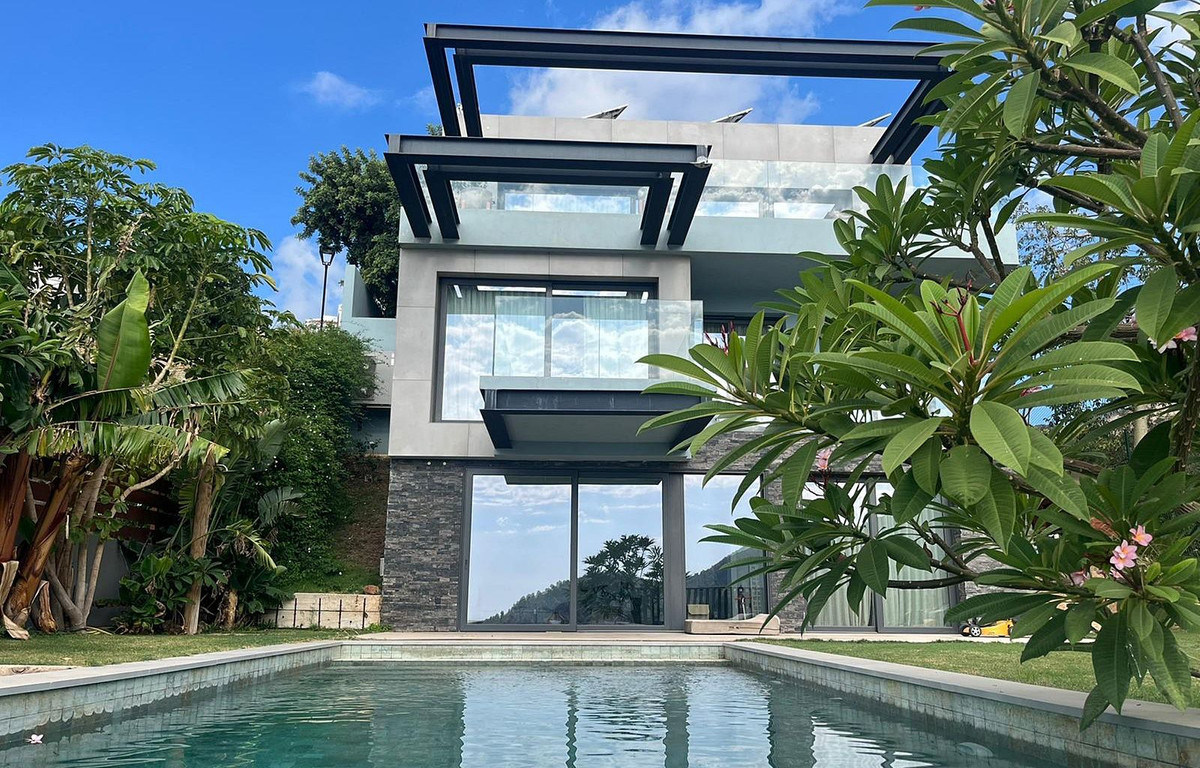
vs. La Cala de Mijas
La Cala is the most commercially active sub-zone within Mijas municipality. It should be evaluated independently; its pricing and demand profile diverges from the broader Mijas Costa average.

Indicative figures from our advisors.
Nestled in the mountains at 428 metres above sea level, Mijas Pueblo is a charming village cherished along the Costa del Sol by tourists and locals alike. Narrow cobbled streets and beautiful whitewashed houses define a typically picturesque Andalusian mountain village that clings to the hillside, emerges from the pine trees and looks out over the entire coast below. For what homes here are asking, see Costa del Sol property prices by area.
Mijas is a thriving hub of traditional Spanish arts and crafts, with one of the largest concentrations of artisan workshops on the coast. The squares and streets are lined with shops selling unique ceramics, leather, jewellery, paintings, linens and wicker — a marketplace that has barely changed in character for generations.
Mijas has a rich culinary tradition, with tapas cafés and restaurants tucked along the cobbled streets and secret outside gardens. Local specialities include maimones (a garlic soup), salmorejo (a thick gazpacho), sopas cachorreñas (with bread and bitter orange) and pescaíto frito — the deep-fried fish that defines Andalusian coastal cooking.
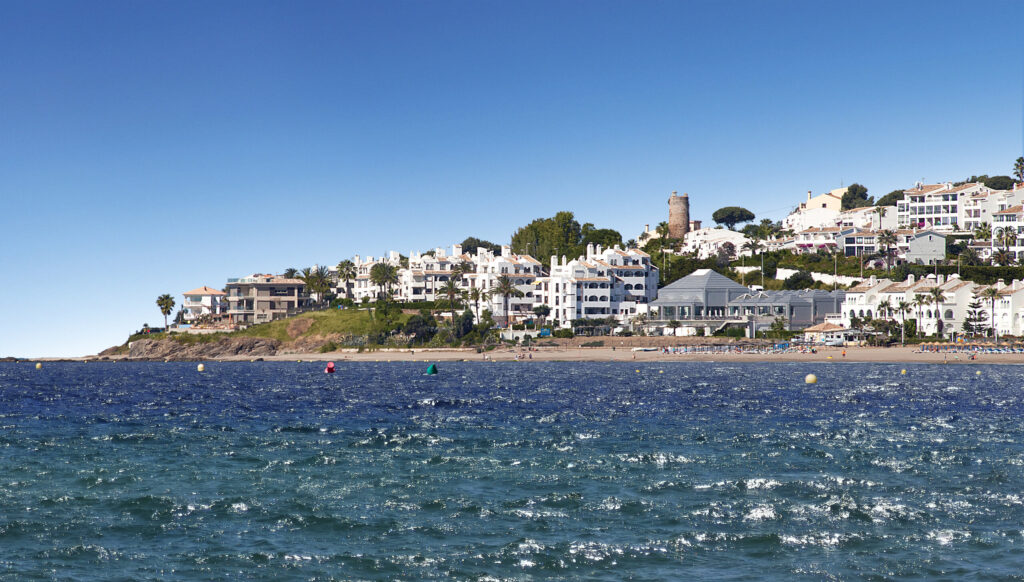
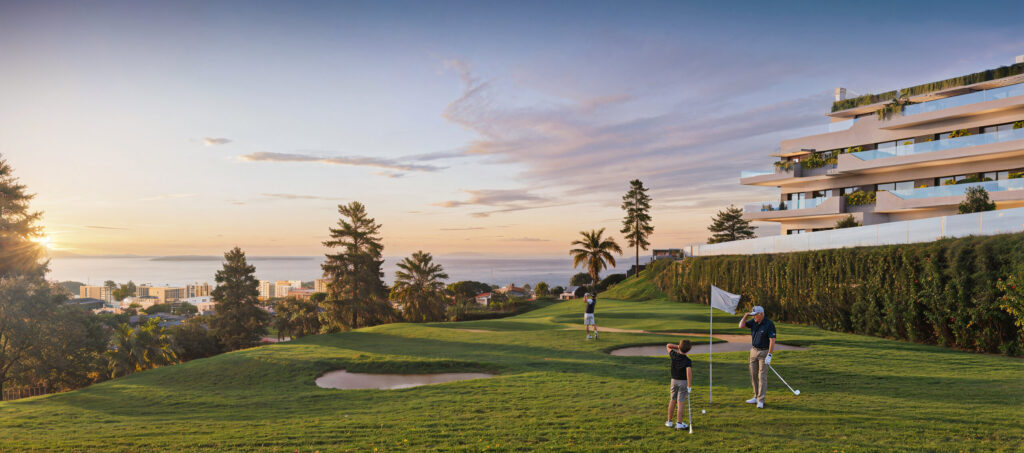

The village invites slow exploration — donkey taxis, originally used to carry workers to and from the fields, are now a charming Mijas experience. The three chapels of San Sebastián, Nuestra Señora de los Remedios and San Antón tell the village's story, while the Shrine to the Patroness — carved out of the rock in 1548 with a remarkable coffered ceiling — is among the most evocative spots. The 1900-built Mijas Bullring, an oval arena set within a square building elevated on a rock, has hosted some of the world's best bullfighters.
Six hiking routes suit a range of skill levels and lead into the surrounding natural areas with marvellous views of the Mediterranean below. Small museums add cultural depth — the Town House Museum with its ethnographic collection, El Carromato de Max with miniatures from 50 countries, and the Mijas Bullfighting Museum. The Mayan Monkey chocolate factory in one of the busiest squares offers tastings and workshops for adults and children.
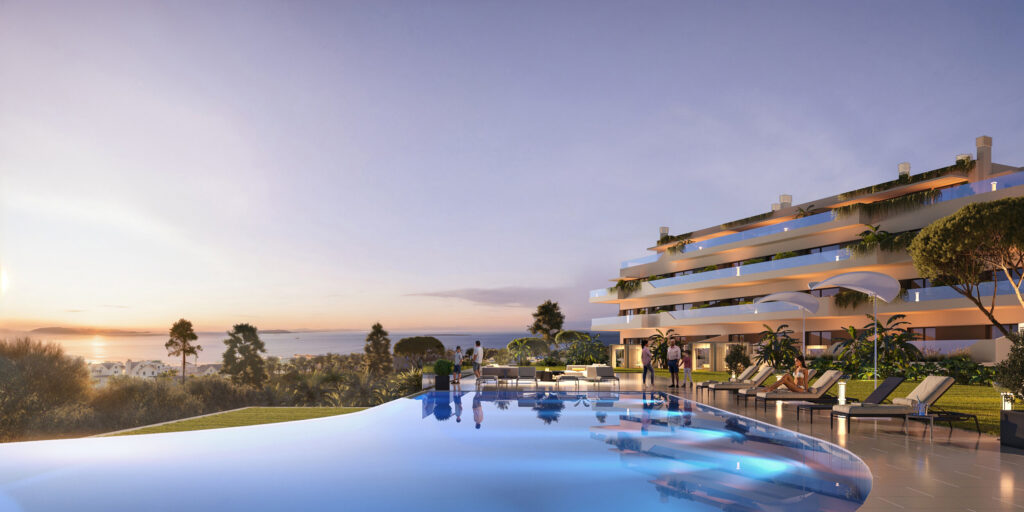
Mijas Pueblo is only 15 to 20 minutes from Málaga Airport, which connects the Costa del Sol with more than 120 worldwide destinations several times a day. Despite its altitude, the village is easily accessible from the N-340 coastal road and offers a large underground parking area for private vehicles.
Regular buses connect the pueblo to all coastal towns and to Fuengirola, where the Renfe train service runs onwards to Málaga and the airport.
Becoming a resident of Spain or contributing to Social Security entitles you to free public healthcare through the Centros de Salud network. European visitors with a European Health Insurance Card can access care during their stay; affordable private health insurance is widely available through Mapfre, Caser and Sanitas.
Mijas Pueblo has an excellent Medical Centre on Avenida Méjico for those registered in the Spanish system, and nearby Fuengirola adds further facilities including Centro Médico Xanit and Centro Salus Clinic.
There is a wide choice of nurseries, primary and secondary public schools across Mijas Costa and Fuengirola. Spanish schools accept pupils according to area of residency, with applications made at the Fuengirola Town Hall. Public schools typically offer free transport, extracurricular activities and additional Spanish tuition for expat children.
A number of private schools — both Spanish and international — operate in nearby Fuengirola, complementing the public network with bilingual and international curriculum options.
Mijas covers three operationally distinct sub-markets: Mijas Pueblo (historic hillside village, premium townhouse stock), Mijas Costa (coastal strip, high rental volume), and the golf valleys (La Cala Golf, Mijas Golf) with active residential development. Sub-zone specificity is essential — municipality-level analysis misleads.
La Cala is the most commercially active sub-zone within Mijas municipality. It should be evaluated independently; its pricing and demand profile diverges from the broader Mijas Costa average.
Fuengirola is denser and more commercially active with stronger rental yields. Mijas Costa provides comparable coastal rental performance at marginally lower pricing but with less commercial infrastructure.
Benalmádena is more northward-facing and hillside-dominant. Mijas is more coastal-strip oriented in its primary sub-zone, with the hillside premium concentrated in the Pueblo.
Coastal strip apartments for rental income; Mijas Pueblo townhouses for capital retention; golf valley villas for family second-home demand. Each sub-zone requires distinct acquisition logic — generalising across the municipality leads to poor decisions.
Golf valley and municipal fringe zones offer the most active development potential. Medium-density villa and townhouse product is the primary viable format. Mijas Pueblo planning is restrictive and heritage-sensitive.
Mijas Costa delivers the strongest rental yields. Mijas Pueblo carries stronger capital retention. Golf valleys offer a balanced yield-capital proposition for villa-format assets. Sub-zone selection is the primary investment variable.
Factory-built, A+ energy rated luxury villas assembled on-plot in approximately 12 months. Available on qualifying urban plots in Mijas golf valley and hillside zones.
Mijas Costa coastal pricing is firm. Mijas Pueblo stock is price-sensitive to condition; premium townhouses at the top of the village command disproportionate interest. Golf valley pricing is rising in line with the central corridor.
Coastal frontage is fully built out. Golf valley development land is available but competitive. Mijas Pueblo is constrained by heritage protections and limited planning permissions.
Northern European retirement and second-home demand is structurally stable. Golf demand supports villa and townhouse activity in the valleys. Increasing UK and Scandinavian family demand tracking similar trends in La Cala.
Municipal sub-zone specificity is critical — overgeneralised Mijas pricing is misleading. Older coastal stock requires structural due diligence. Rental regulation at municipal level requires monitoring across zone types.
Active in golf valley zones. Limited on the coastal strip. Mijas Pueblo planning pipeline is minimal. Medium-density new-build remains enter the golf corridors at a controlled pace.
€220k - €1.2m
Historic hillside village with premium townhouse and villa stock. Capital retention is the primary investment case; heritage constraints limit supply. Buyer profile: permanent residents and long-term holders.
€200k - €900k
The coastal strip with the highest rental demand and turnover volume. Apartment-led, yield-driven. Broad buyer base. The most liquid sub-zone for investment acquisition in the municipality.
€300k - €1.5m
Golf valley urbanisations — the most active development zone in the municipality. Strong family second-home demand. Eco-villa product applicable on qualifying plots. Capital appreciation tracks the La Cala growth corridor.
€150k - €550k
Lower-priced residential fringe with selective development potential. Increasing demand from domestic buyers and budget-constrained northern European buyers seeking space. Entry-level land pricing in the municipality.
1 / 12
Ready to take the next step?
Fill out the form and we’ll be in touch.